Category: Project news

  • Folktales are helping conserve Borneo’s orangutans

    Folktales are helping conserve Borneo’s orangutans

    Photo: An orangutan mother and her baby. Terry Sunderland / CIFOR-ICRAF

    15 May 2026 – When researchers from the Center for International Forestry Research and World Agroforestry (CIFOR-ICRAF) and local NGO Riak Bumi began surveying Bornean orangutan [Pongo pygmaeus pygmaeus] populations in Kapuas Hulu, West Kalimantan, in the early 2010s, they came across something “rather strange”, says CIFOR-ICRAF scientist Linda Yuliani.

    Two forest areas, both in good condition by standard measures, showed dramatically different results. One had high densities of orangutan nests (the proxy the scientists used to determine population sizes for the notoriously elusive animals). The other had none.

    The biologists on the team were befuddled. But their anthropologist colleagues had a hypothesis. “They told us that in the forest with a lot of orangutan nests — in the Iban Dayak [local Indigenous group] area — there was a strong traditional knowledge system applied by the local communities,” says Yuliani.

    “They have a number of very well-known folktales that encourage people to protect the animals, and support strong norms and taboos about not disturbing orangutans.” 


    Acknowledgements

    For more information on this project, please contact Linda Yuliani: L.Yuliani@cifor-icraf.org

  • How smarter biodiversity monitoring is helping protect the ecosystems people rely on

    How smarter biodiversity monitoring is helping protect the ecosystems people rely on

    Photo: A researcher collects water samples for eDNA analysis, one of the six monitoring methods being tested. Luke McKenna/FAO.

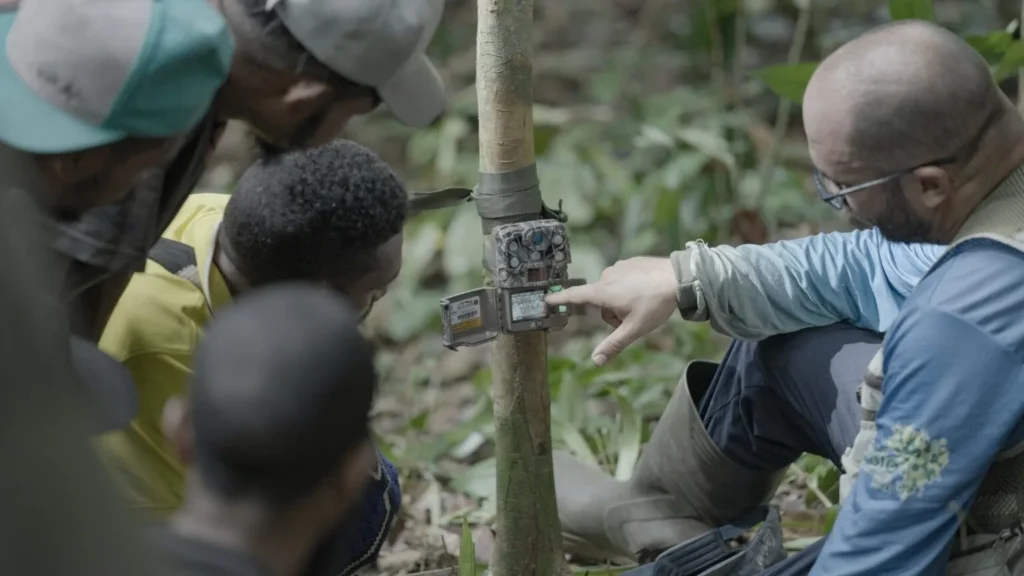
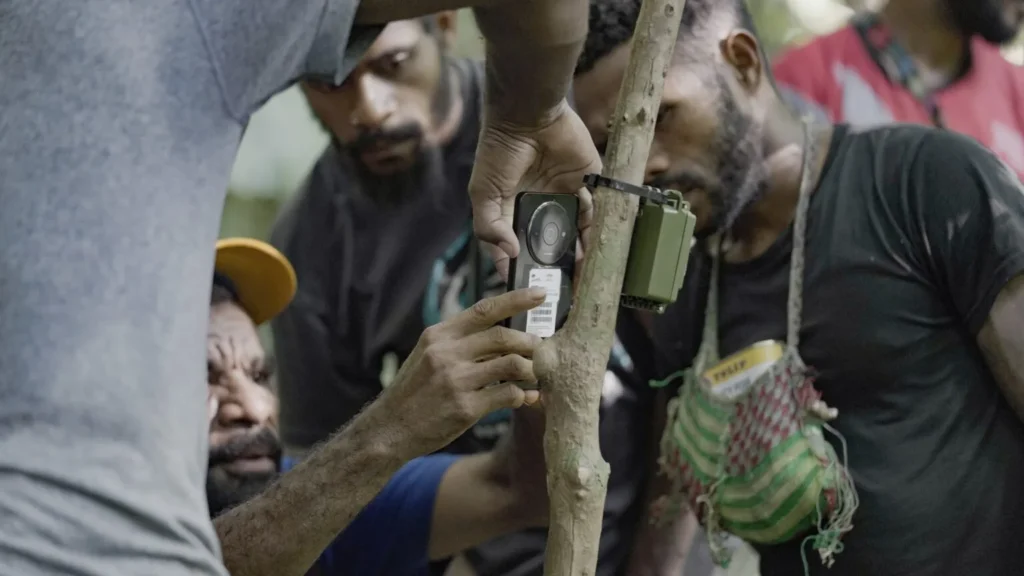
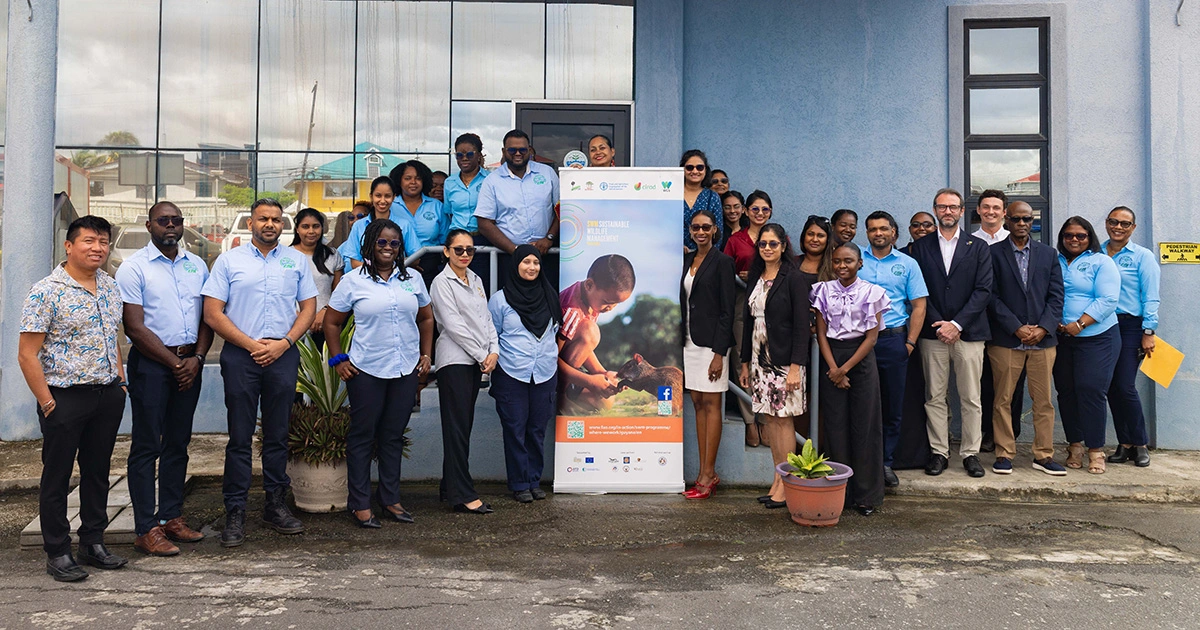
    1 May 2026 – A partnership between the Center for International Forestry Research and World Agroforestry (CIFOR-ICRAF) and Map of Life Solutions has identified over 740 species in Guyana so far through mixed-method biodiversity monitoring.

    Researchers involved in the partnership collect and analyze data from Sustainable Wildlife Management (SWM) Programme sites in five countries: Cameroon, Democratic Republic of the Congo (DRC), Guyana, Papua New Guinea (PNG), and Zambia.

    By combining data from camera traps, environmental DNA (eDNA), soundscapes, bird counts, fish stock assessments and Local Ecological Knowledge (LEK) with AI-assisted analysis, researchers can accurately identify more species and develop a better understanding of biodiversity-rich ecosystems. This in turn helps governments and resource managers make more informed decisions about how to sustainably manage their natural resources through policies, markets, and national frameworks.

    “Biodiversity is in crisis, and decision-makers have been flying blind – lacking the reliable, standardized data they need to act across scales,” said Chrissy Durkin, CEO for Map of Life Solutions.

    “This partnership is changing that. By combining cutting-edge monitoring methods with the knowledge of local communities and indigenous peoples on the ground, and feeding all of it into models that are relevant and decision-ready across time and space, we’re producing biodiversity intelligence that is rigorous enough to shape national policy and trustworthy enough to support nature finance.”


    Acknowledgements

    Map of Life Solutions is powered by the science of the Center for Biodiversity and Global Change at Yale University. Their partnership with CIFOR-ICRAF is funded by the European Commission (EC) and facilitated through the Sustainable Wildlife Management (SWM) Programme. Acoustic monitoring, camera trap monitoring, and AI analysis are provided through Wildmon, while Map of Life Solutions facilitates the eDNA sampling, lab processing, and data integration to produce species distribution models that power standardized metrics. 

    The SWM Programme is a major international initiative that aims to improve the conservation and sustainable use of wildlife in forest, savannah and wetland ecosystems. It is funded by the European Union, with co-funding from the French Facility for Global Environment (FFEM) and the French Development Agency (AFD). Projects are being piloted and tested with governments and communities in 16 participating countries. The initiative is coordinated by a dynamic consortium of four partners, led by the Food and Agriculture Organization of the United Nations (FAO) with the Center for International Forestry Research and World Agroforestry (CIFOR-ICRAF), the French Agricultural Research Centre for International Development (CIRAD) and the Wildlife Conservation Society (WCS).

  • More people are eating wild meat across Central Africa, raising urgency for sustainable wildlife management

    More people are eating wild meat across Central Africa, raising urgency for sustainable wildlife management

    Photo: Bushmeat cooking in Yaselia Village, Tshopo Province – DRC. Axel Fassio/CIFOR-ICRAF

    30 April 2026 – A study in Nature provides the first quantitative spatial and temporal analysis of wild meat consumption in Central Africa, revealing a sharp increase in demand that is largely driven by urban populations.

    The total annual biomass of wild meat consumed across Central Africa has increased from an estimated 0.73 million tonnes in 2000 to 1.10 million tonnes in 2022. This increase is threatening wildlife populations and raising concerns about long-term nutritional security in rural areas.


    Acknowledgements

    These findings are the result of a collaboration between the Centre for International Forestry Research and World Agroforestry (CIFOR-ICRAF), the Durrell Institute of Conservation and Ecology (DICE) at University of Kent, the University of Stirling, the Centre for Advanced Study of Collective Behaviour (CASCB) at University of Konstanz, and the Institute for Research on Tropical Ecology (IRET) in Gabon.

    Analysis for this study was supported by the EU-funded Sustainable Wildlife Management (SWM) Programme, which is currently piloting field projects in 16 countries. The initiative is implemented by a dynamic consortium of four partners, led by the Food and Agriculture Organization of the United Nations (FAO) with the Center for International Forestry Research and World Agroforestry (CIFOR-ICRAF), the French Agricultural Research Centre for International Development (CIRAD) and the Wildlife Conservation Society (WCS). Data was collected through the WILDMEAT project (www.wildmeat.org), which has been supported by the US Fish and Wildlife Service (USFWS), US Agency for International Development (USAID) and UK Research and Innovation (UKRI).
  • Malawi: Why conservation and food security are inseparable

    Malawi: Why conservation and food security are inseparable

    Photo: A farmer works in a field in central Malawi. CIFOR-ICRAF

    29 April 2026 — A blog on Forests News interviewed Lessah Mandaloma, researcher at the University of Oxford, to discuss how the expansion of conservation areas in Malawi often conflicts with people’s needs for food security and economic development.

    Her recent publication in Conservation Science and Practice explores how communities around Kasungu National Park believe future scenarios for conservation and agricultural policies — including fertilizer subsidies and farmer compensation schemes for crops that are damaged by wildlife — could shape outcomes.

    The study concluded that conservation priorities can only be met if policies meaningfully engage local communities and fairly address their needs.

    “In this landscape, conservation decisions often prioritize ecological outcomes,” said Mandoloma. “Often, they don’t fully account for local livelihoods, governance realities or social outcomes, even though these ultimately determine whether conservation succeeds or fails.”


    Acknowledgements

    The study behind this blog was supported by the Government of Malawi, Lilongwe University of Agriculture and Natural Resources (LUANAR), CIFOR-ICRAF, and the Biology Department, University of Oxford with additional funding from the UK Research and Innovation’s Global Challenges Research Fund (UKRI GCRF) Trade, Development and the Environment Hub project and the Research England International Science Partnership Fund (ISPF) Institutional Support (ODA).

  • Coming soon: Wild Meat Dialogues for Asia and the Pacific

    Coming soon: Wild Meat Dialogues for Asia and the Pacific

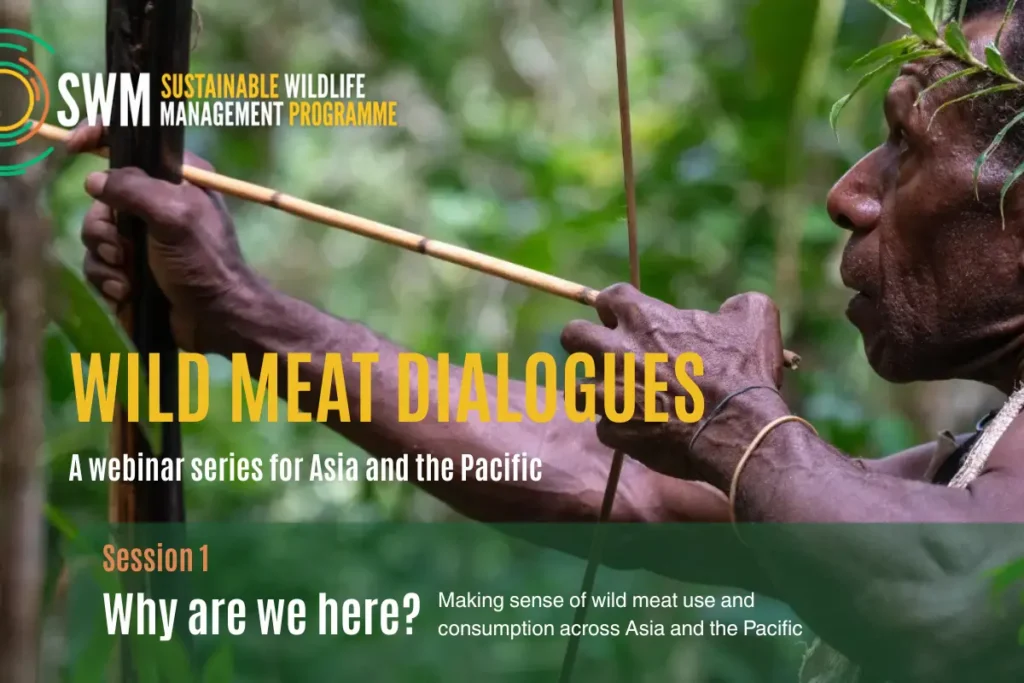
    Photo: Traditional hunter in Papua New Guinea. FAO

    28 Apr. 2026 – The Sustainable Wildlife Management (SWM) Programme is launching a new webinar series in May 2026 in collaboration with the Sustainable Use of Wild Species Transformative Partnership Platform (SU-TPP).  

    The SWM Wild Meat Dialogues will examine research gaps at the intersection of wild meat use and consumption, food security, livelihoods, biodiversity conservation, and zoonotic disease risks across Asia and the Pacific. 

    Why it matters

    Wild meat use and consumption in Asia and the Pacific are critically under-researched, despite their contributions to food security, income, and cultural identity.  

    The SWM Programme has been actively working to address these gaps through diagnostic studies, support for community-based surveillance, and the first comprehensive regional analysis of wild meat consumption and hunting data.  

    But there is an ongoing need for a dedicated platform that can facilitate connections, knowledge exchange and collaboration. The new webinar series answers that need, bringing together researchers, practitioners and policy makers to share what they know, identify research priorities and inform policies that scale up sustainable wildlife management across the region. 

    What’s next?

    Stay informed about upcoming webinars through the mailing list and be part of the regional community. 

    Structure of the Wild Meat Dialogues, connecting evidence to policy. FAO.
    Structure of the Wild Meat Dialogues, connecting evidence to policy. FAO.

    Acknowledgements

    The Sustainable Wildlife Management (SWM) Programme is funded by the European Union with co-funding from the French Facility for Global Environment and the French Development Agency. The initiative is coordinated by a dynamic consortium of four partners, led by the Food and Agriculture Organization of the United Nations (FAO) with the Center for International Forestry Research and World Agroforestry (CIFOR-ICRAF), the French Agricultural Research Centre for International Development (CIRAD) and the Wildlife Conservation Society (WCS). 
  • USAID Wild Meat Toolkit finds new virtual home

    USAID Wild Meat Toolkit finds new virtual home

    Photo: Meat seller’s cart at Mon Repos market in Georgetown, Guyana. Francois Sandrin/CIFOR

    26 Apr. 2026 – Resources from the former United States Agency for International Development (USAID) Wild Meat Collaborative Learning Group are now available at wildmeat.org.

    The Wild Meat Toolkit for Integrated Design, Monitoring, and Adaptive Management collects and shares lessons learned from projects related to wild meat, showing how these efforts connect to food security, health, and biodiversity. It brings together a range of cross-sector approaches to tackling wild meat issues and provides ways to measure their success. USAID and its partners used this interactive toolkit to apply a One Health approach to address wild meat challenges more effectively. 

    Why it matters

    Wild animals are critical for ecosystems to function and support human well-being. Many people rely on wildlife for food, nutrition and income.

    Yet, habitat destruction and overexploitation of wild resources through hunting and trade is on the rise. Achieving development goals while conserving biodiversity requires interdisciplinary collaboration, and this toolkit offers a holistic framework for conservation-program design, monitoring and adaptive management.

    Wild Meat Toolkit for Integrated Design, Monitoring and Adaptive Management

    What’s next?

    Visit the website to download the toolkit, browse case studies and review the key learning questions and associated activities that the Wild Meat Collaborative Learning Group undertook from 2021-2025. 

    The Wild Meat Toolkit complements the WILDMEAT Indicators toolkit, which provides more specific guidance on ecological indicators and population monitoring. 


    Acknowledgements

    The website (wildmeat.org) is supported by the WILDMEAT Project and the Sustainable Use of Wild Species Transformative Partnership Platform (SU-TPP)

  • Rethinking “sustainable use” of wild species for a changing world

    Rethinking “sustainable use” of wild species for a changing world

    Photo: Collecting material for hunting traps in Yangambi, Democratic Republic of the Congo (DRC). Axel Fassio/CIFOR-ICRAF

    14 Apr. 2026 – The Sustainable Use of Wild Species Transformative Partnership Platform (SU-TPP) launched its first webinar with 318 participants from almost 70 countries across all continents. 

    Experts from diverse regions and disciplines came together to explore a timely question: 

    How can the ‘use’ of wild species for food, income or cultural traditions become part of the solution for a sustainable future? 

    “We chose the theme of sustainable use in a changing world for today’s webinar because the context in which wild species are managed is changing very rapidly,” said SU-TPP Lead Coordinator, Hani Rocha El Bizri, during his opening address.  

    “The effects of climate change, biodiversity loss, shifting food systems, disease risks and evolving policy agendas are increasingly interconnected.” 

    Drawing on over 15 years of experience working alongside local communities in the Amazon who practice subsistence hunting, he noted a clear shift in thinking towards recognizing that sustainable use is compatible with conservation and the rights of Indigenous People and local communities. 

    El Bizri welcomes participants to the SU-TPP launch webinar.

    The newly launched SU-TPP aims to turn this recognition into action, aligning with the Kunming-Montreal Global Biodiversity Framework (GBF) and its mandate for sustainable, equitable and safe use of wild species—outlined in Targets 5 and 9

    “I believe this community of practice will have an important role to play in that transformation,” said El Bizri. 

    Refocusing around sustainable use

    In his keynote, Robert Nasi, Co-Founder of the SU-TPP and Director of Science at the Center for International Forestry and World Agroforestry (CIFOR-ICRAF) traced the origins of the community back to 1999, when sustainable use was largely overlooked in global biodiversity discussions. 

    “At the time, everybody was working on conservation or on biodiversity benefit sharing, but we had forgotten the third element of the first declaration of the CBD [Convention on Biological Diversity], which was sustainable use,” he said. “We did not believe that ‘use’ could be sustainable.” 

    Today, the stakes are clearer. The latest IPBES report on sustainable use confirms that wild species are essential for millions of peoples’ food, income and cultural identity. Yet, they are often used in ways that are unsustainable, inequitable, and unsafe.  

    What is the SU-TPP?

    The SU-TPP responds to this complexity by fostering a community of practice that puts sustainable use at the heart of solutions to interconnected challenges like biodiversity loss, food and nutritional security, and zoonotic disease transmission.  

    Hosted by CIFOR-ICRAF and co-founded with the University of Oxford and Manchester Metropolitan University, the platform brings together research institutions, Indigenous organizations and civil society groups with a shared vision for a world where all wild species that people use are managed sustainably, equitably and safely. 

    Three features distinguish the TPP’s approach: 

    • Grounded research: Working alongside projects to co-produce evidence, attract new funding sources and connect researchers, especially in tropical regions. 
    • Investing in the future: Supporting early-career researchers and strengthening collaboration across regions. This is especially relevant for scientists in regions with limited access to institutional support, funding, and scientific publication. A future focus also means advancing integrated approaches to biodiversity monitoring and ecosystem management, including e-DNA, camera traps, local ecological knowledge surveys, AI-assisted data analysis. 
    • Beyond traditional conservation: Looking beyond protected areas to understand how wild species are used across entire landscapes, including farms, forests and coastal systems, ensuring these realities are reflected in policy and governance. 
    Nasi introduces the SU-TPP at the launch webinar.

    Similar trends across regions

    Following the keynote presentation about the SU-TPP, moderator and Scientist at the University of Cambridge, Charles Emogor, opened a conversation on the biggest trends shaping how wild species are used and managed across Africa, Asia and Latin America.  

    Five key insights emerged: 

    1. Many people use wild species; the conversation is not only about subsistence 

    “In West Africa, you see everywhere the use and high dependence on wild animals and plants,” said Sandra Owusu-Gyamfi, Director of the Ghana Wildlife Society. “…and it’s not only poor people who use these resources.”  

    Urban and higher-income consumers may also drive demand, paying a premium for wild meat or other products for cultural reasons or personal preference. Many species are traded for pets or medicine, for example—legally and illegally. 

    1. Wild foods are undervalued in food systems 

    Wild and semi-cultivated foods contribute significantly to nutrition, yet they are often overlooked in policy.  

    “I think people often undermine the use of wild species thinking it is only food for very poor people and that once development takes place in the area, people will consume healthier safer food,” said Mulia Nurhasan, food and nutrition scientist at CIFOR-ICRAF and the Southeast Asia Coordinator of the NutriScapes initiative. 

    However, that is not always the case. Nutrient-rich wild foods are often replaced by ultra-processed foods when large-scale agricultural and urbanization projects overtake wild spaces. Nurhasan went on to say that research so far shows that plant and animal-sourced foods contribute a lot to peoples’ micronutrient and protein intake, but there is still work ahead to value wild species in food systems: 

    “It’s very important for policy makers to understand food system thinking in general… so that before you make a grand gesture that influences the food system, you also understand that there are always trade-offs and that the communities and governments are ready for those trade-offs. System thinking is very important for that.” 

    1. Policies exist but often struggle in implementation 

    Many countries have laws regulating hunting and trade of wild species, but enforcement remains a challenge.  

    “Even if we have a beautiful and wonderful law, it’s difficult to implement,” said Owusu-Gyamfi, noting that people will continue hunting if viable alternatives are not available.

    Strict regulations can also make research more difficult, as communities engaged in informal or illegal trade may be reluctant to share information. In these cases, working through trusted local organizations is essential. 

    1. Pressures on wild species are increasing 

    All regions are experiencing increasing pressure on wild species.  

    In the Amazonian context, Pedro Constantino, a researcher specializing in the sustainable use of natural resources by traditional peoples in the Amazon, highlighted the impacts of climate change, increase in internet connectivity, rural-urban migration, and organized crime expansion on resource use. 

    On a more hopeful note, however, there is also a trend of large-scale community organizations working together to influence policy in Brazil, creating networks and working with government to recognize local communities use rights for key species. 

    Florence Palla, Regional Coordinator of the Center of Excellence for a Central African Forest Observatory (OFAC-CE), noted a similar trend in the Central African context of pressures from markets, consumption, deforestation and habitat destruction, traditional use, and illegal traffic.  

    1. Indigenous and community management is essential, but still under-used 

    Amidst these different pressures, Palla prioritized sustainable management for the community level first “because they depend directly on wild resources.” 

    “We have to go beyond ecological considerations,” she said. “Beyond the quotas and data to take into account the traditional value of wild species and the social conceptions of what communities need.”   

    Yet participatory approaches remain inconsistently applied, and local knowledge is still not fully integrated into policy and research. 

    Together with other stakeholders, community management can help ensure wild resources are maintained for today and for future generations.  

    What’s next?  

    The conversation underscored that peoples’ use of wild species is no longer something that can be ignored in national policy and biodiversity conservation. 

    The SU-TPP invites researchers, practitioners, and policy makers to be part of the community seeking to achieve more sustainable, equitable and safe futures for all wild species.  


    Acknowledgements

    The SU-TPP is hosted by CIFOR-ICRAF and co-founded with the University of Oxford and Manchester Metropolitan University.

  • Wild monkeys are catching HBV in the Brazilian Amazon deforestation frontier

    Wild monkeys are catching HBV in the Brazilian Amazon deforestation frontier

    6 Apr. 2026 — A new study in EcoHealth is the first report of human hepatitis B virus (HBV) in wild neotropical primates. 

    Researchers tested blood or liver samples from 88 primates across 28 species and two Brazilian Amazonian regions—one human-impacted area (Rondonia and Mato Grosso states) and one remote area (upper Japurá River, Amazonas state). They found HBV in 17 out of 49 primates from the human-impacted areas. None of the 39 primate samples from the remote area had contracted HBV.  

    The findings suggest that human population density significantly predicts human HBV infection in wild primates, supporting the hypothesis of human-to-primate disease spillover that is driven by deforestation and encroachment (Figure 1) 

    Figure 1: A scatter plot showing the positive correlation between HBV probability in monkeys and human population density (persons/km2) 

    Why it matters

    Increasing deforestation and human encroachment into wildlife habitats is increasing human-primate interactions, which could lead to more cross-species disease transmission. In the Amazon, Indigenous people and local communities consume an estimated three million primates from the genara AlouattaAteles and Sapajus for subsistence. Other primate species, especially squirrel monkeys (Samiri spp.) are often traded as pets. Both the pet trade and subsistence hunting increase instances of human-primate interaction. 

    Primates (e.g. chimpanzees) who contract HBV have been shown in experimental studies to develop symptoms such as lethargy, jaundice and anorexia. However, there are currently no clinical studies involving New World primates. 

    What’s next?

    The study recommends increased monitoring and preventative measures to mitigate the risk of human-primate disease transmission. 


    Acknowledgements

    Molecular analyses and Japura field expeditions were funded by CNPq SISBIOTA Program to IPF, and in Rondˆonia by grants from the Fundac¸a˜o Oswaldo Cruz Rondˆonia (FIOCRUZ/RO), Fiocruz- Rondˆonia, CT-Amazˆonia, and CNPq Universal.

  • Roadway seizures expose large-scale illegal wild meat use across Brazil

    Roadway seizures expose large-scale illegal wild meat use across Brazil

    Hunter arrested with 66 dead wild birds in southwestern Paraná. Photo by PRF/PR

    1 Apr. 2026 — A new study uses seizure records from Brazil’s Federal Highway Police (PRF) to uncover the scale and composition of illegal wild meat use at a national level. 

    Published in Perspectives in Ecology and Conservation, the study analyzes nationwide road-seizure records between 2017 and 2024 with a focus on hunted animals and wild meat intercepted during transport. It further tested whether seizure records matched ecological signs of defaunation (human-induced loss of animal populations), finding: 

    • Across 314 independent seizures, PRF intercepted about 9,479 animals, totalling 9.3 tons of biomass. 
    • The Amazon and Caatinga biomes accounted for the largest number of seizures and individual animals, respectively. 
    • Birds were the most frequently seized animals in the Caatinga and Pampa regions, while mammals accounted for the largest share of total biomass. 
    • Road-seizure data reflect defaunation trends; as larger animals become scarcer in degraded areas, people tend to catch more, but smaller, animals, including birds and reptiles. 

    Why it matters

    Brazil is home to hyper-diverse ecosystems that are threatened by accelerating human-induced biodiversity loss. Illegal wild meat hunting especially affects ‘large-bodied vertebrates’ (e.g. mammals), whose decline can trigger cascading impacts on ecosystem health.  

    Illegal hunting is especially hard to monitor, and field-based data collection faces many legal and logistical constraints. Roadway seizures provide a unique and underused dataset that can act as “a cost-effective barometer of illegal wild meat use,” especially if agencies adopt standardized reporting.  

    What’s next?

    The study calls for a targeted response, pairing police enforcement on highways and waterways with standardized inter-agency reporting (e.g. species captured, their biomass, geolocation found, and product form). It further recommends community partnerships, creation of livelihood alternatives, and improved communication about health risks to reduce demand for wild meat.


    Acknowledgements

    This study was financed in part by the Coordenação de Aperfeiçoamento de Pessoal de Nível Superior – Brasil (CAPES) and the Anhanguera-Uniderp University, for the scholarship to RWZ. The authors would also like to thank all the people involved in hunting seizures in Brazil and their priceless efforts to halt illegal hunting in Brazil.

  • Report finds substantial trade and take of migratory bird species for consumption

    Report finds substantial trade and take of migratory bird species for consumption

    23 Mar. 2026 – A new report prepared by BirdLife International for the Secretariat of the Convention on Migratory Species 15th Conference of the Parties (CMS/COP15) finds “substantial trade and take of migratory bird species for consumption” in Africa and Eurasia.

    Around 70% of CMS-listed species assessed were recorded as being consumed (157 out of 224), with the highest rates among the most threatened species. Consumption was documented in over two-thirds of countries studied (84 out of 123), highlighting the broad geographic scale of the issue.

    While data remain patchy, available estimates suggest tens of millions of birds are killed each year across Europe, North Africa, the Middle East and the Caucasus—including millions from protected species, the vast majority of which are consumed as food. Legal hunting levels are even higher in some regions, but inconsistent data collection makes it difficult to determine the full scale of both legal and illegal take.

    Why it matters?

    The level of consumption threatens migratory bird species’ populations, which weakens ecosystems and increases risk for zoonotic disease transmission.

    Declines in bird species such as hornbills, seabirds and vultures are undermining critical ecosystem functions, including seed dispersal, nutrient cycling and disease control. These impacts are compounded by threats like lead poisoning in the United Kingdom and European Union and the use of toxic pesticides affecting wetland birds in parts of Africa.

    While direct links between bird consumption and zoonotic disease transmission remain limited, evidence highlights the vital role of species like vultures in reducing disease risk. Their decline can increase the spread of disease by allowing scavenger populations such as rats and dogs to grow unchecked.

    What can be done?

    The report calls for stronger and more coordinated action to protect migratory species. Key priorities include clarifying species listings, strengthening national legislation and penalties, and improving enforcement to better deter illegal activity.

    It also highlights the need to boost compliance through awareness and engagement with hunting communities, while supporting alternative livelihoods where communities rely on wild bird consumption.

    Finally, the report emphasizes improving data collection and monitoring, alongside greater international cooperation across flyways, to better understand impacts and coordinate effective conservation responses.


    Acknowledgements

    This report was produced by BirdLife International in partnership with the Center for International Forestry Research and World Agroforestry (CIFOR-ICRAF), the IUCN Sustainable Use and Livelihoods Specialist Group (SULi), and the Food and Agriculture Organization of the United Nations (FAO).