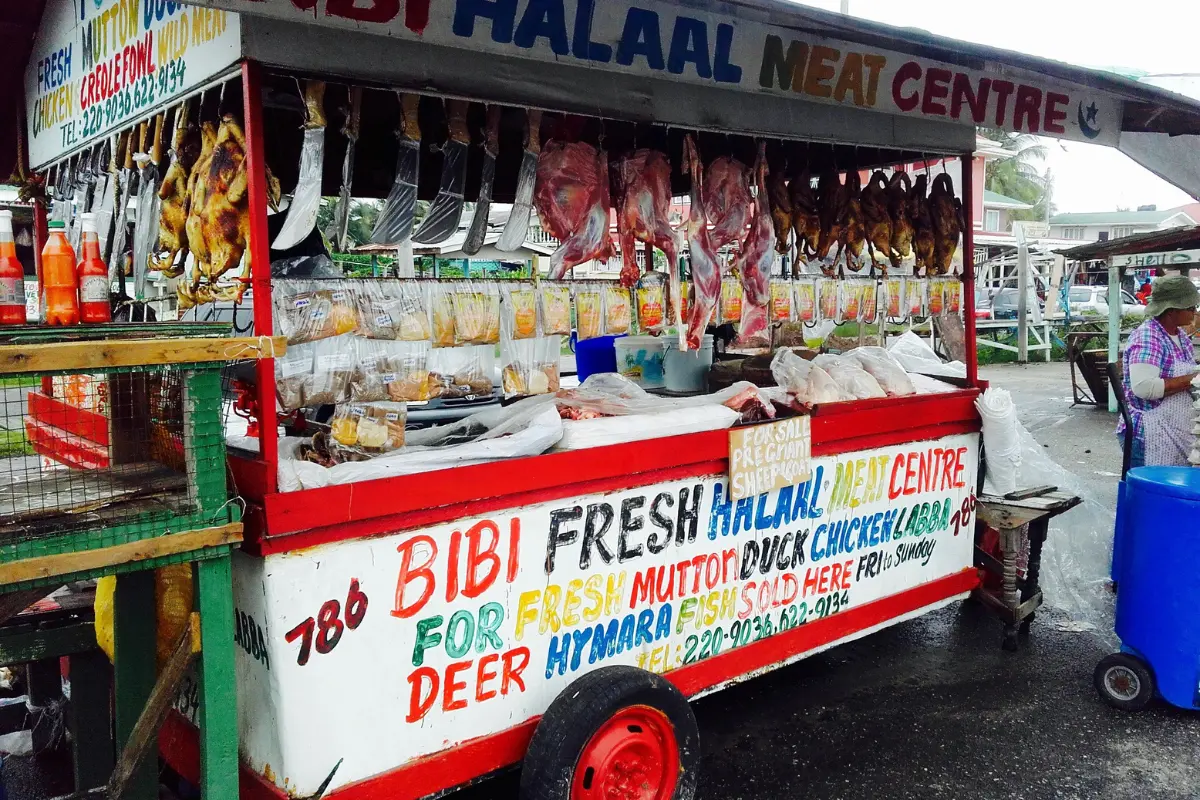
Photo: Meat seller’s cart at Mon Repos market in Georgetown, Guyana. Francois Sandrin/CIFOR
26 Apr. 2026 – Resources from the former United States Agency for International Development (USAID) Wild Meat Collaborative Learning Group are now available at wildmeat.org.
The Wild Meat Toolkit for Integrated Design, Monitoring, and Adaptive Management collects and shares lessons learned from projects related to wild meat, showing how these efforts connect to food security, health, and biodiversity. It brings together a range of cross-sector approaches to tackling wild meat issues and provides ways to measure their success. USAID and its partners used this interactive toolkit to apply a One Health approach to address wild meat challenges more effectively.
Why it matters
Wild animals are critical for ecosystems to function and support human well-being. Many people rely on wildlife for food, nutrition and income.
Yet, habitat destruction and overexploitation of wild resources through hunting and trade is on the rise. Achieving development goals while conserving biodiversity requires interdisciplinary collaboration, and this toolkit offers a holistic framework for conservation-program design, monitoring and adaptive management.
What’s next?
Visit the website to download the toolkit, browse case studies and review the key learning questions and associated activities that the Wild Meat Collaborative Learning Group undertook from 2021-2025.
The Wild Meat Toolkit complements the WILDMEAT Indicators toolkit, which provides more specific guidance on ecological indicators and population monitoring.
Acknowledgements
The website (wildmeat.org) is supported by the WILDMEAT Project and the Sustainable Use of Wild Species Transformative Partnership Platform (SU-TPP).