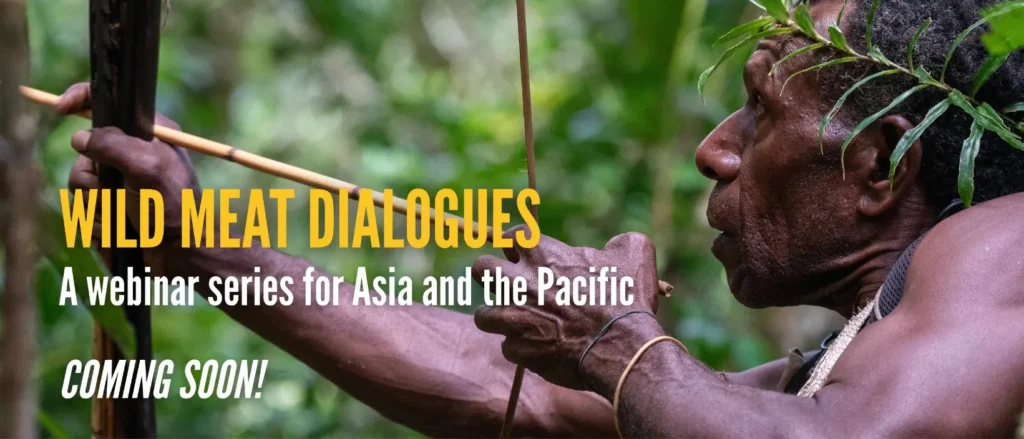
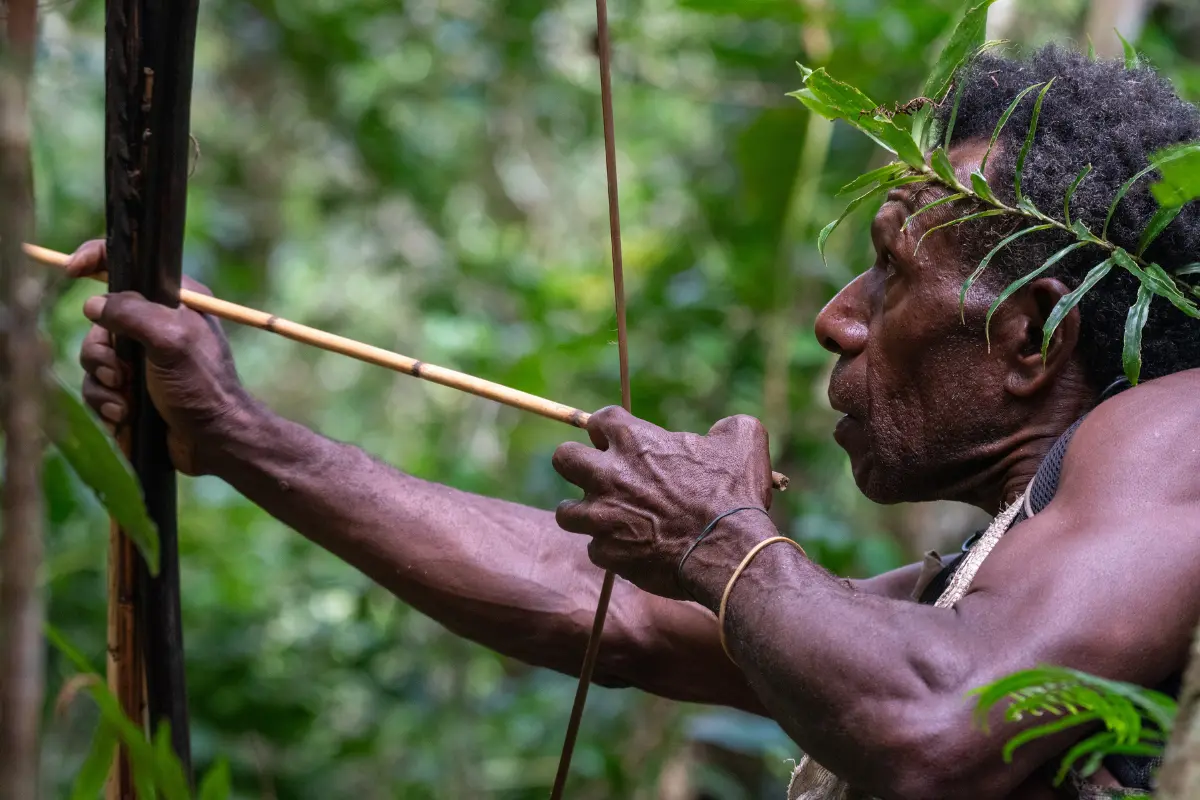
Photo: Traditional hunter in Papua New Guinea. FAO
28 Apr. 2026 – The Sustainable Wildlife Management (SWM) Programme is launching a new webinar series in May 2026 in collaboration with the Sustainable Use of Wild Species Transformative Partnership Platform (SU-TPP).
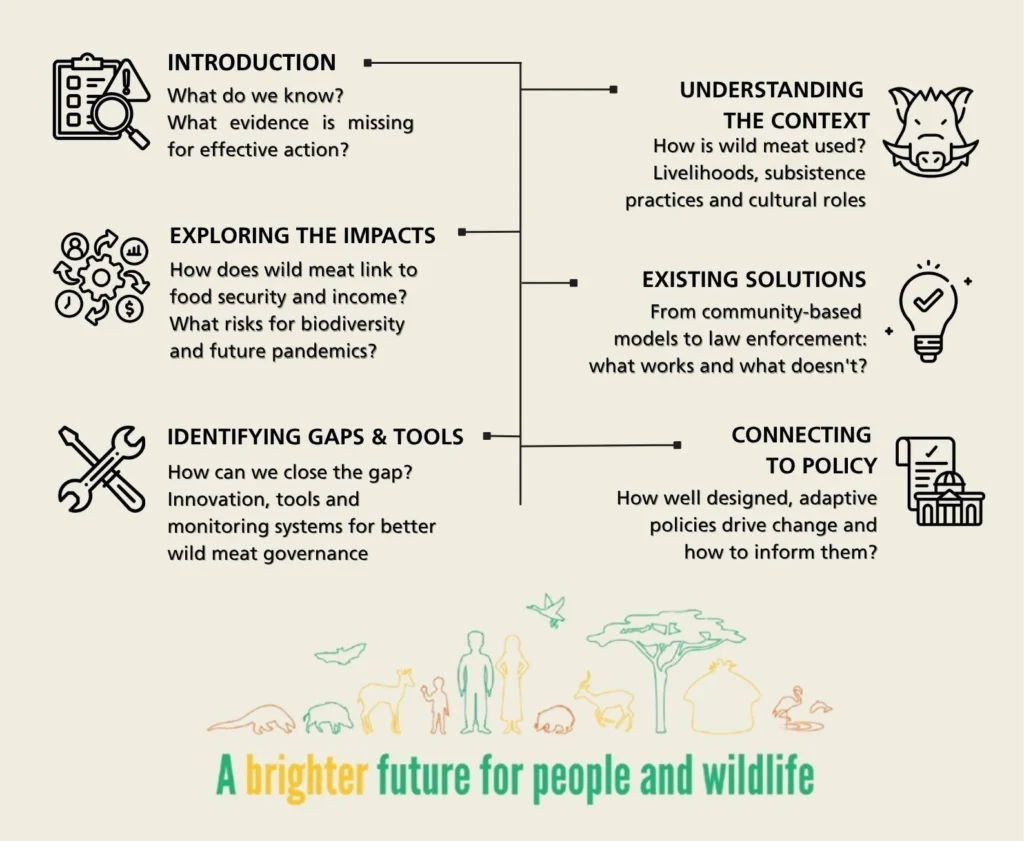
The SWM Wild Meat Dialogues will examine research gaps at the intersection of wild meat use and consumption, food security, livelihoods, biodiversity conservation, and zoonotic disease risks across Asia and the Pacific.
Why it matters
Wild meat use and consumption in Asia and the Pacific are critically under-researched, despite their contributions to food security, income, and cultural identity.
The SWM Programme has been actively working to address these gaps through diagnostic studies, support for community-based surveillance, and the first comprehensive regional analysis of wild meat consumption and hunting data.
But there is an ongoing need for a dedicated platform that can facilitate connections, knowledge exchange and collaboration. The new webinar series answers that need, bringing together researchers, practitioners and policy makers to share what they know, identify research priorities and inform policies that scale up sustainable wildlife management across the region.
What’s next?
Stay informed about upcoming webinars through the mailing list and be part of the regional community.
Acknowledgements
The Sustainable Wildlife Management (SWM) Programme is funded by the European Union with co-funding from the French Facility for Global Environment and the French Development Agency. The initiative is coordinated by a dynamic consortium of four partners, led by the Food and Agriculture Organization of the United Nations (FAO) with the Center for International Forestry Research and World Agroforestry (CIFOR-ICRAF), the French Agricultural Research Centre for International Development (CIRAD) and the Wildlife Conservation Society (WCS).