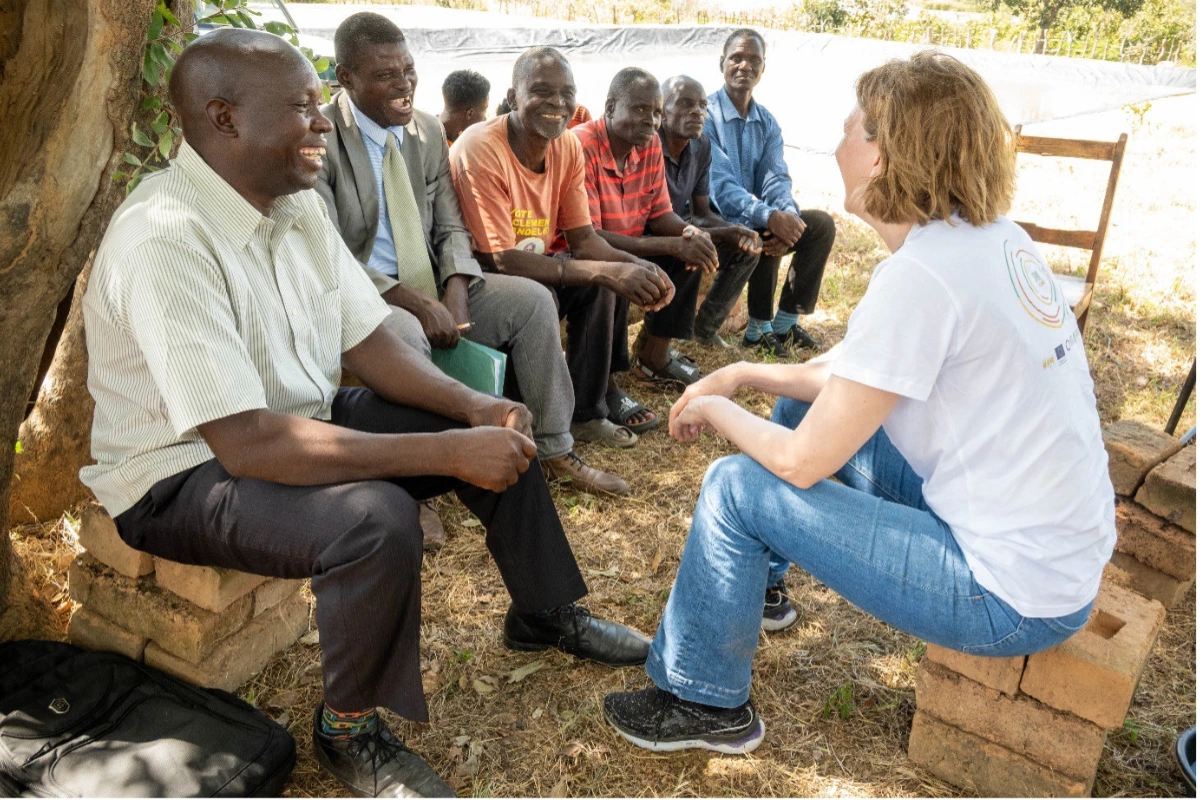
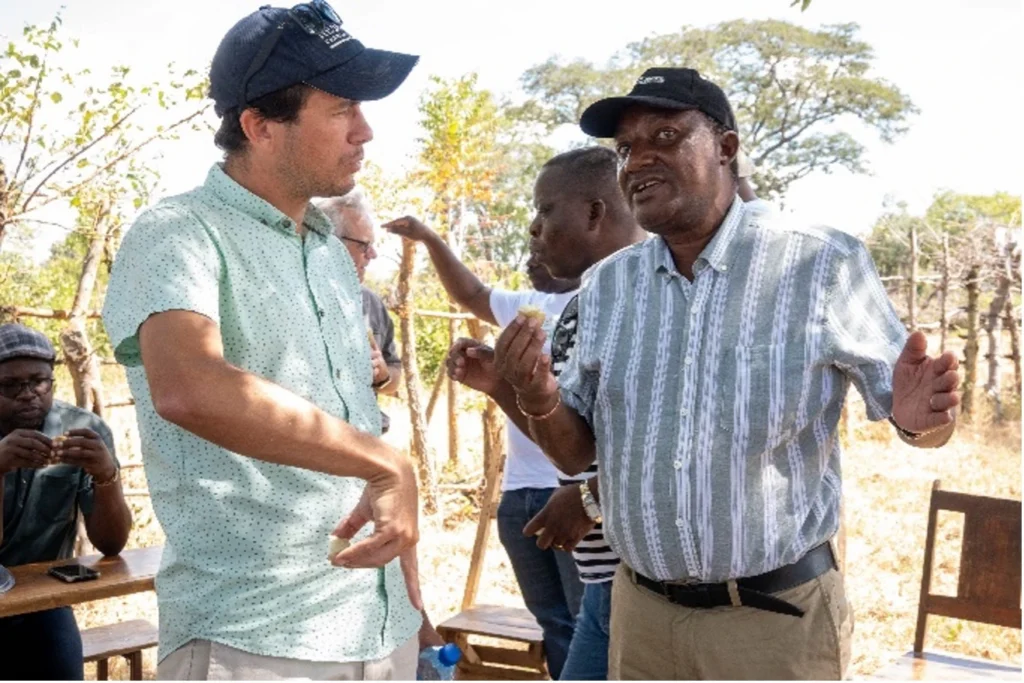
Sustainable Wildlife Management (SWM) Programme, Lauren Coad (far right) interacting with Sianyongo Fish Farming Cooperative members in Southern Zambia. Photo: CIFOR-ICRAF/Zambia
By Lydia Amanzi
Apr. 2026 — A three-day field visit to Sustainable Wildlife Management (SWM) Programme sites in Zambia offered a World Bank delegation more than presentations and meetings. From the fish ponds in Nyawa that are farmed by the Sianyongo Fish Farming Cooperative (SFFC) to the fresh, sweet honey harvests of the Lushomo Beekeeping Cooperative, participants saw firsthand how community conservation is creating livelihood opportunities in southern Zambia.
The main purpose of the visit was the launch of the World-Bank funded Transforming Landscapes for Resilience and Development (TRALARD II) Project on 14 April 2026, which has identified Kazungula as a key area for upscaling community driven development initiatives. But beyond the official launch, the visit became an opportunity to showcase the growing work and impact of the SWM Programme.
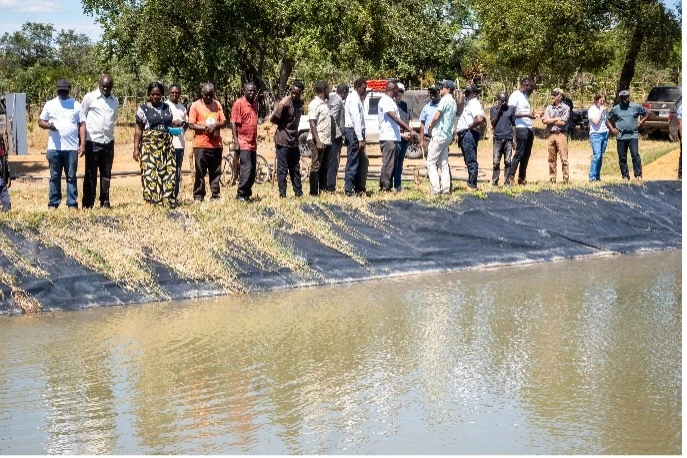
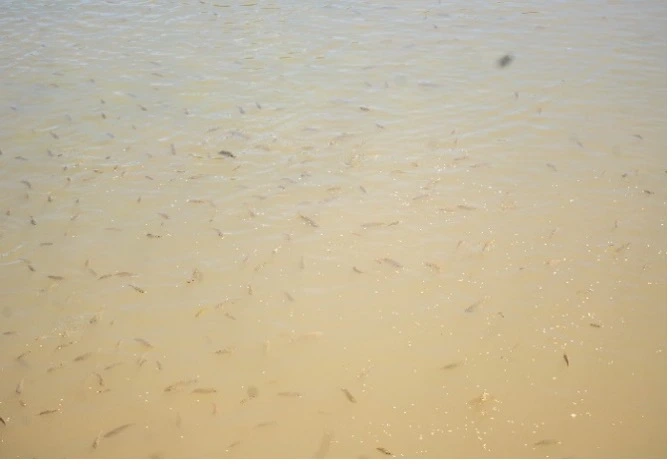
The journey kicked off at the SFFC in Nyawa Chiefdom where community members shared how fish farming is helping households improve nutrition and earn income. Around the ponds, conversations quickly turned from fish production to the bigger picture involving reducing pressure on wildlife and creating sustainable livelihood options.
“Community-led enterprises are central to the long-term success of conservation,” said Lauren Coad, Principal Investigator for the SWM Programme at the Center for International Forestry Research and World Agroforestry (CIFOR-ICRAF), during the visit. “When communities can generate income from sustainable activities such as fish farming and beekeeping, it reduces pressure on wildlife while strengthening local food systems.”
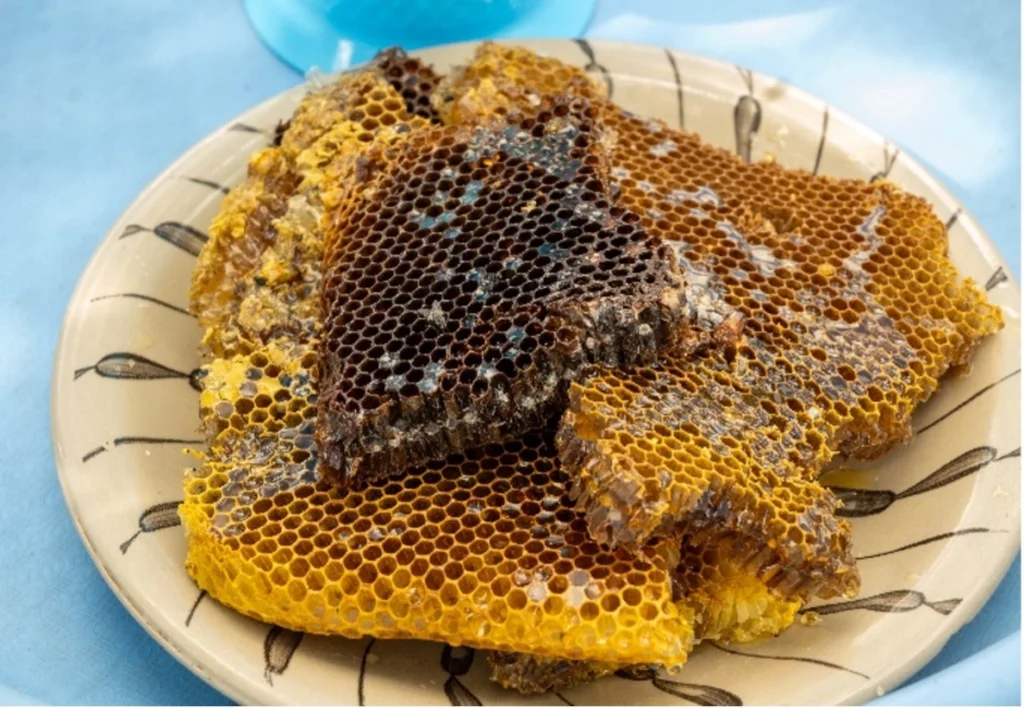
The delegation later made its way to the Lushomo Beekeeping Cooperative, where members proudly treated guests to freshly harvested honey. The relaxed stop gave the delegation a chance to hear from community members about how beekeeping is supporting household incomes while encouraging communities to protect forests and natural habitats.
The SWM Programme promotes fish farming and beekeeping as alternatives to growing concerns over unsustainable hunting, which continues to threaten wildlife populations globally. For many rural households, these community conservation enterprises are becoming important sources of food, income, and resilience.
“What we are seeing in Nyawa is proof that conservation and development can move together,” said Coad. “Healthy ecosystems support healthy livelihoods.”
The visit also included technical coordination meetings led by SWM Programme Site Coordinator, Griffin Shanungu, Community Liason, Matthew Munsanda, and Social Safeguards Consultant, Daniel Phiri, who monitors ongoing programme activities with local cooperatives. Although limited time prevented the delegation from visiting the community spray race initiative, the team presented CIFOR-ICRAF’s broader work under the SWM Programme and COLANDS initiative in Livingstone at the end of the field visit.
Throughout the three days, the CIFOR-ICRAF team distributed brochures, factsheets, and programme impact materials, ensuring stakeholders gained a deeper understanding of the programme’s footprint in Zambia.
Acknowledgements
The SWM Programme is a major international initiative that aims to improve the conservation and sustainable use of wildlife in forest, savannah and wetland ecosystems. It is funded by the European Union, with co-funding from the French Facility for Global Environment (FFEM) and the French Development Agency (AFD). Projects are being piloted and tested with governments and communities in 16 participating countries. The initiative is coordinated by a dynamic consortium of four partners, led by the Food and Agriculture Organization of the United Nations (FAO) with the Center for International Forestry Research and World Agroforestry (CIFOR-ICRAF), the French Agricultural Research Centre for International Development (CIRAD) and the Wildlife Conservation Society (WCS).