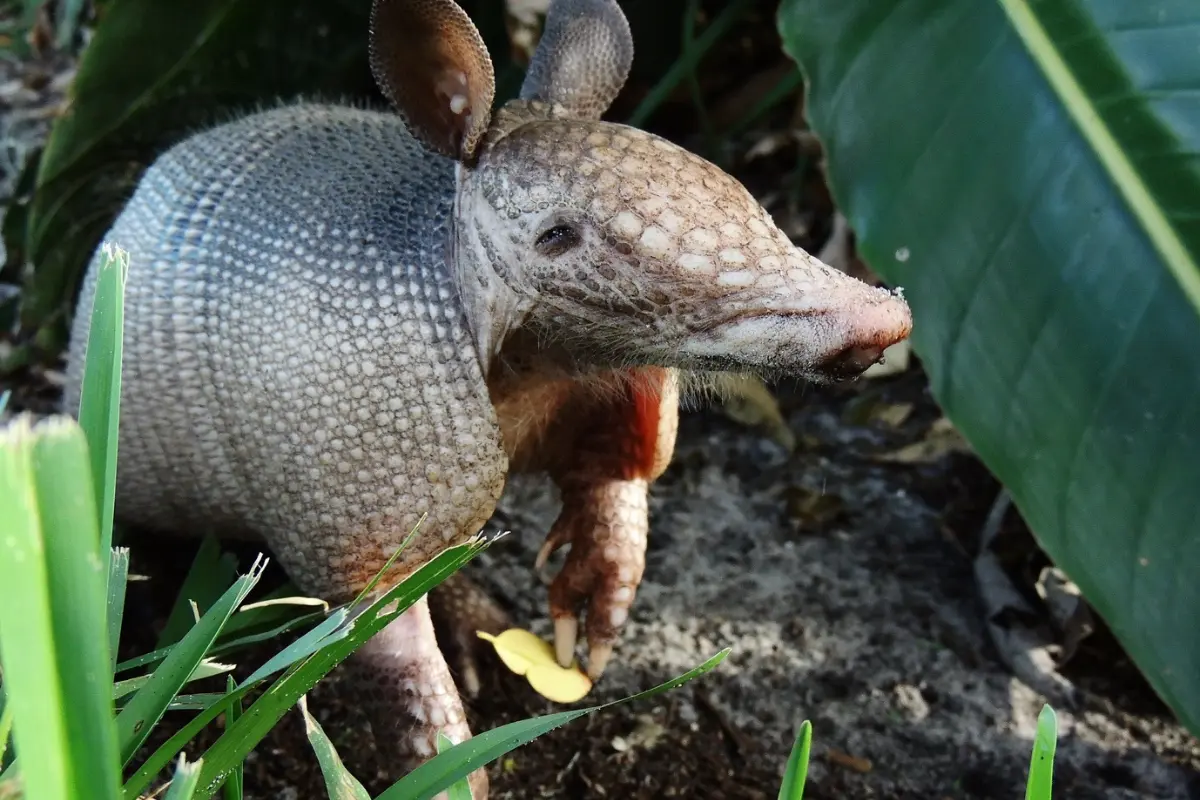
A nine-banded armadillo (Dasypus novemcinctus). Photo by Jim Mullhaupt.
This content was originally posted on Forests News.
6 Jul. 2026 — Leprosy (caused by the bacterium Mycobacterium leprae) is an ongoing public health challenge across the tropical Americas. The disease primarily affects the skin and peripheral nerves and – until recently – was thought to spread mainly from human to human through respiratory droplets. Mounting evidence, however, suggests armadillos can also transmit the disease to humans, especially when people hunt and handle them directly.
An estimated 25 percent of all new human leprosy cases in Brazil are now linked to armadillos, and that figure jumps to 40 percent in deforestation hotspots, such as the Amazon’s so-called “arc of deforestation“.
These findings come from a 2025 study in Infectious Diseases of Poverty, which maps where armadillo-to-human leprosy transmission happens most and where public health interventions work best.
Drawing on more than 326,000 reported leprosy cases across Brazil between 2013 and 2022 and a dataset of 554 hunted armadillos across 175 municipalities, the researchers developed a model to estimate the armadillo-hunting infection risk. They also identified other factors that amplify the risk, including higher population density, environmental degradation (deforestation), malnutrition and socioeconomic status.
Hani Rocha El Bizri, lead author and coordinator of the Sustainable Use of Wild Species Transformative Partnership Platform (SU-TPP), sat down with Forests News to share more.
What is the link between armadillo hunting, deforestation and leprosy in Brazil?
The most important finding of the study is that an estimated 25 percent of all new human leprosy cases in Brazil relate to hunting and consumption of armadillo meat.
Before this study, the World Health Organization (WHO) recognized a link between armadillos and leprosy transmission; a few human cases had been reported in the United States that matched the genotype of the leprosy bacteria, Mycobacterium leprae. However, our findings suggest the number of people infected through hunting armadillos is much higher than expected.
We also identified several other variables responsible for zoonotic disease transfer. In heavily deforested areas, we see a higher prevalence of the disease in both humans and armadillos. In some municipalities located in Brazil’s ‘arc of deforestation,’ up to 40 percent of leprosy cases could be attributed to armadillo hunting and use. This is very high and very concerning.
Acknowledgements
Landscape Alliance scientists contributed key data sets and collaborated on this research with researchers from many institutions; funding comes from the University of Malaga, the TRADEHub project and the Leprosy Research Initiative (LRI).