
The need
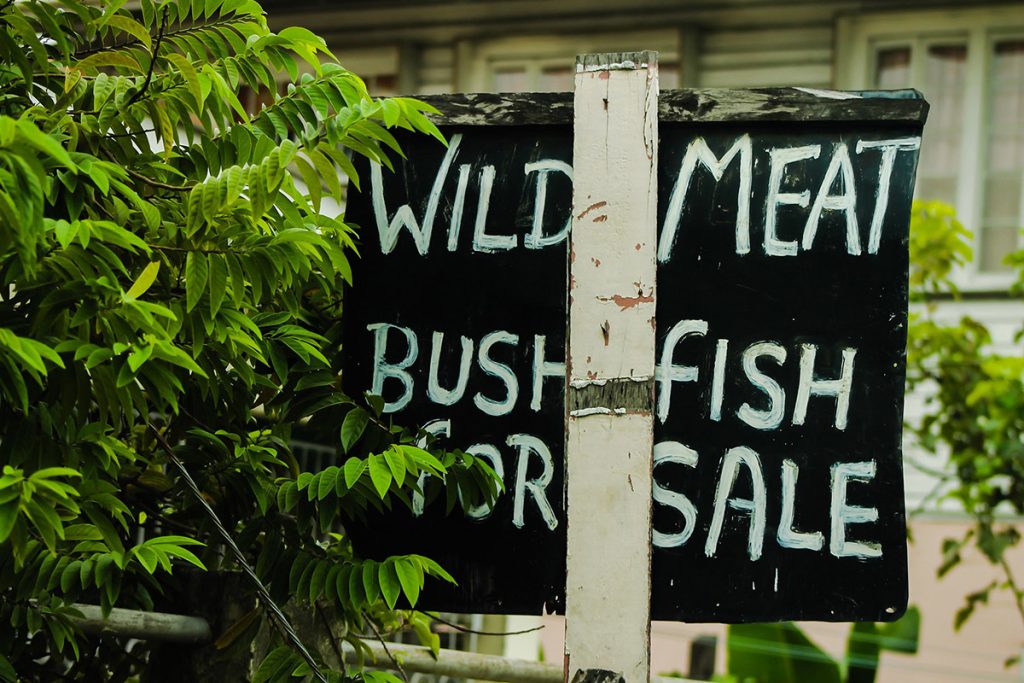
Wild meat plays a crucial role in food security and livelihoods across Central Africa, but its handling and trade also pose potential risks for zoonotic disease transmission (when diseases spread between animals and humans). Promoting safer practices along the wild meat supply chain, from hunting to preparation and sale, is essential to protecting both public health and biodiversity.
This project seeks to understand how zoonotic disease risks are perceived and mitigated among communities involved in wild meat hunting, preparation, and trade. The final goal of this project is to inform strategies that reduce health risks while supporting sustainable wild meat practices.
What we’re doing
This study investigates risk-mitigating behaviours related to zoonotic disease transmission among key stakeholders in wild meat supply chains near the Dja Reserve and Boumba Bek National Park in Cameroon. Our key activities include:
1
Assessing behaviours of hunters, food preparers, and vendors to identify practices that increase or reduce disease transmission risks.
2
Understanding local knowledge and perceptions about zoonotic diseases.
3
Piloting intervention strategies to promote safer handling and consumption practices in areas around the Dja Reserve.
4
Engaging local communities and stakeholders to co-develop risk reduction measures that are practical and culturally appropriate.

The team
This project is a collaboration between:
CIFOR-ICRAF, FOREP, Manchester Metropolitan University (MMU), Universitat Autónoma de Barcelona, University of Salford
Project leads:

Supporters
This project is supported by